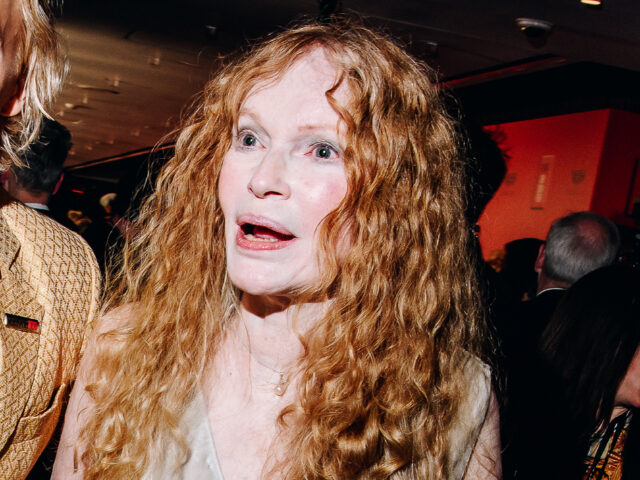
When actress Mia Farrow suggested that former President Donald Trump may have staged the recent White House Correspondents’ Dinner (WHCD) shooting to improve his approval ratings, it didn’t just spark outrage—it reignited a broader conversation about the erosion of truth in political discourse. While the claim lacks evidence and has been widely dismissed by experts, its mere existence reflects a deeper cultural anxiety: how quickly speculative narratives take root in today’s hyper-partisan media ecosystem.
Farrow’s comments, made on social media shortly after the incident, were brief but incendiary. She wrote: “Convenient timing. Suspicious optics. Could the WHCD shooting have been staged to boost Trump’s sympathy numbers? Questions must be asked.” Within hours, the post went viral—shared, mocked, defended, and scrutinized by journalists, political analysts, and ordinary users alike.
There was no shooting at the WHCD.
That’s the critical fact often lost in the storm: the event took place without incident. Farrow was referencing a hypothetical or rumored shooting that never occurred. Her post appears to have conflated unverified online chatter with reality, or worse, used fiction to make a political point. Either way, the statement crossed a line for many—not because it questioned political motives, but because it weaponized a traumatic trope to do so.
Why This Claim Spread So Quickly
Misinformation thrives in ambiguity, and Farrow’s post arrived during a period of intense political tension. Trump’s campaign has been gaining momentum, and public approval ratings have shifted dramatically in his favor since re-entering the 2024 race. At the same time, disinformation around political violence has surged, with deepfakes, AI-generated images, and viral hoaxes becoming commonplace.
Farrow’s celebrity status amplified the reach. With over 1.5 million followers across platforms, her words carry weight, even when detached from facts. Her history of activism—particularly around human rights and children’s welfare—lends her an air of moral authority, which makes controversial statements like this all the more jarring.
But celebrity commentary on politics is no longer about influence—it’s about virality. In that context, Farrow’s post, however misguided, was perfectly calibrated for engagement. It used familiar conspiracy language (“convenient timing,” “questions must be asked”), invoked distrust in institutions, and targeted a polarizing figure. The formula works—even when the premise is fictional.
The Real Danger: Normalizing False Narratives
The deeper issue isn’t whether Mia Farrow actually believes a staged shooting occurred. It’s that public figures can now float such ideas without immediate consequence. In doing so, they contribute to a climate where any political event—especially acts of violence—is suspect.
This phenomenon isn’t new. After the 2017 Las Vegas shooting, conspiracy theorists claimed it was a “false flag” operation. Following the 2016 Pulse nightclub attack, baseless theories circulated online within minutes. Now, it’s happening in reverse: instead of reacting to real events, public figures are projecting them—and speculating about their manipulation before they occur.
That’s a dangerous shift.
When a celebrity suggests a political rival might orchestrate violence for polling gains, even hypothetically, it erodes public trust in future reporting. What happens when a real attack does happen? Will people hesitate to believe it? Will sympathy be withheld, waiting for the “other shoe to drop”? Farrow’s comment, however intended, feeds that cycle.
Trump’s Approval Surge: Real, But Not That Simple
Farrow’s claim hinges on the idea that Trump’s rising approval ratings are suspicious—so much so that they must be artificially manufactured through dramatic events. But data shows a more nuanced reality.
Since announcing his 2024 campaign, Trump’s approval among Republicans has consistently climbed. A recent Gallup poll showed his favorability within the party at 78%, up from 68% a year earlier. Independent voters have also warmed to him on certain issues, particularly immigration and economic concerns.
But this shift didn’t happen in a vacuum.
- Biden’s age and health concerns have fueled voter anxiety.
- Inflation and border policy remain potent issues.
- Media fatigue with progressive policies has created space for populist messaging.
- Trump’s legal battles, paradoxically, have galvanized his base, casting him as a victim of political persecution.
In other words, Trump’s rise isn’t the result of a manufactured crisis—it’s the product of real political dynamics. To suggest otherwise isn’t just inaccurate; it diminishes the legitimacy of voter sentiment, reducing complex decisions to cynical manipulation.
How Celebrities Shape Political Discourse
Celebrities have always weighed in on politics. From Ronald Reagan to George Clooney to Taylor Swift, fame and influence often go hand in hand. But the digital age has changed the stakes.
In the past, a celebrity’s political opinion might appear in a newspaper interview or a campaign ad—controlled, edited, and contextualized. Today, a single unmoderated tweet can reach millions in seconds, often stripped of nuance.
Mia Farrow isn’t alone in crossing the line. In recent years, we’ve seen: - Rosie O’Donnell claim that 9/11 was an inside job. - Charlie Sheen promote Pizzagate conspiracies. - Kanye West make antisemitic remarks with global backlash.
Each incident reveals the same pattern: emotional conviction overriding factual rigor, amplified by platform algorithms that reward outrage.
The problem isn’t that celebrities have opinions. It’s that their platforms allow them to bypass the checks that journalists, politicians, and analysts face. No fact-checking. No editorial oversight. Just raw, unfiltered assertion—often treated as commentary, never held to account like policy statements.
The WHCD: A Symbol Under Strain
The White House Correspondents’ Dinner has long been a lightning rod for controversy. Once a bipartisan celebration of press freedom, it’s now seen by many as elitist, performative, and out of touch.
Trump never attended the dinner during his presidency, calling it “so overrated.” His absence helped fuel a broader narrative of hostility between the administration and the press. In 2024, as tensions remain high, the event has taken on even greater symbolic weight.
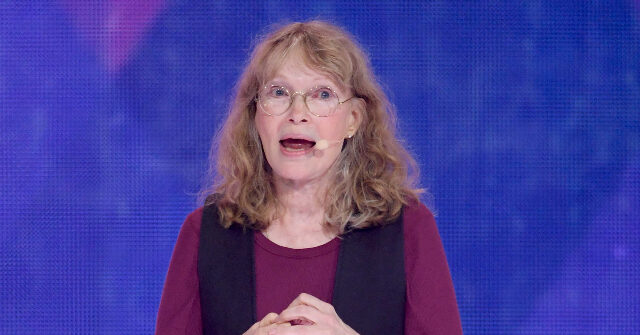
Farrow’s comment—suggesting a shooting at the WHCD—taps into that symbolism. It imagines the dinner not just as a target of criticism, but of violence. That’s not political satire. It’s a dark fantasy dressed as analysis.
And while no actual threat was made, law enforcement agencies still had to assess the situation. Rumors of violence, even baseless ones, require response. That’s a real cost—of time, resources, and public anxiety.
The Cost of Hypothetical Harm
One of the most troubling aspects of Farrow’s statement is its casual treatment of political violence. By framing a fictional shooting as a plausible tactic, it trivializes the trauma of real victims.
Consider: - The 2017 Congressional baseball shooting, where Rep. Steve Scalise was critically injured. - The 2022 attack on Paul Pelosi. - The numerous threats against election officials since 2020.
These weren’t PR stunts. They were traumatic events with lasting consequences. To suggest that such violence could be weaponized for polling gains isn’t just false—it’s morally corrosive.
It also plays into a broader narrative used by extremists: that the “other side” is willing to do anything to win. Once that idea takes hold, it justifies preemptive aggression. The logic becomes: They would stage a shooting—so we must stop them first.
That’s how democratic norms unravel.
Where Do We Go From Here?
Mia Farrow has not retracted her statement. Nor has she clarified whether she believed the shooting was real or was making a metaphorical point. That ambiguity is, in itself, part of the problem.
Public figures—especially those with platforms—have a responsibility to distinguish between speculation and assertion, between satire and suggestion. When they don’t, the rest of us pay the price in eroded trust, heightened tensions, and distorted discourse.
So what can be done?
- Media outlets should stop amplifying baseless claims, even to debunk them. Repetition gives legitimacy.
- Platforms must enforce policies on incitement, even when the speaker is a celebrity.
- Audiences need to practice source literacy, asking: Is this real? What’s the evidence? Who benefits from this narrative?
- Celebrities should recognize their influence and use it with care—especially on issues of violence and democracy.
None of this is about censorship. It’s about accountability.
We can protect free speech without elevating dangerous fiction to the level of debate.
Final Thoughts: Truth Still Matters
The idea that Trump—or any politician—would stage a shooting to boost approval ratings is not just false. It’s unthinkable. And yet, it was said. It spread. It was engaged with.
That’s the world we’re in.
Mia Farrow’s comment isn’t just about her. It’s a symptom of a culture where attention trumps truth, where outrage fuels reach, and where the line between satire, speculation, and incitement has blurred beyond recognition.
The real tragedy isn’t that someone made a wild claim. It’s that so many were ready to believe—or at least entertain—the possibility.
In a democracy, facts are the foundation. Once they’re compromised, everything else crumbles.
Act accordingly.
FAQ
What should you look for in Mia Farrow Claims Trump May Have Staged WHCD Shooting? Focus on relevance, practical value, and how well the solution matches real user intent.
Is Mia Farrow Claims Trump May Have Staged WHCD Shooting suitable for beginners? That depends on the workflow, but a clear step-by-step approach usually makes it easier to start.
How do you compare options around Mia Farrow Claims Trump May Have Staged WHCD Shooting? Compare features, trust signals, limitations, pricing, and ease of implementation.
What mistakes should you avoid? Avoid generic choices, weak validation, and decisions based only on marketing claims.
What is the next best step? Shortlist the most relevant options, validate them quickly, and refine from real-world results.